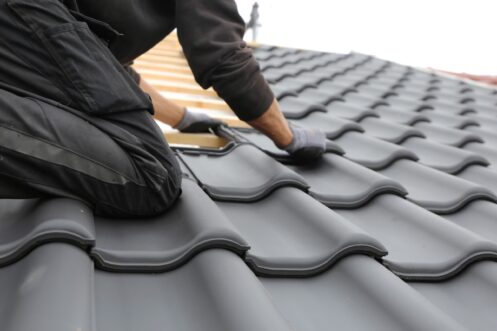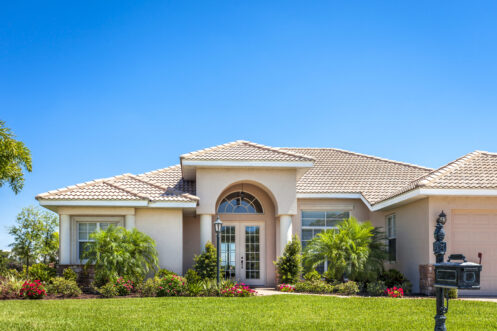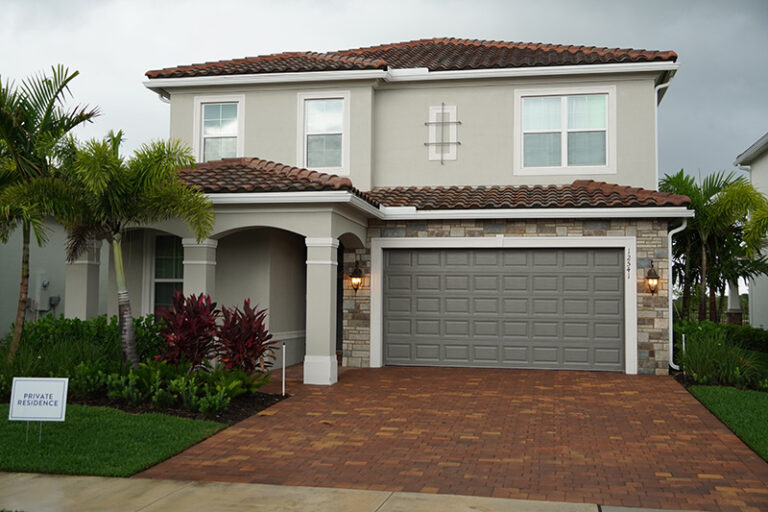


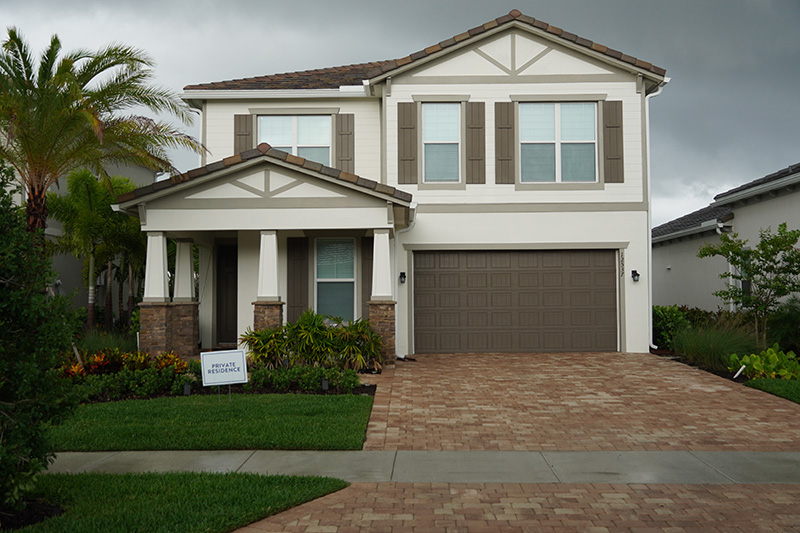
The best roofing materials to reduce heat absorption in Florida are reflective concrete or clay tile and reflective metal, followed by reflective asphalt shingles. In side-by-side tests on identical Florida homes, highly reflective tile and metal kept peak attic air at or below outdoor air temperature. In contrast, the dark shingle control home ran about 40 degrees Fahrenheit hotter. Reflectance matters more than material type, so compare the number on the product data sheet.
Most homeowners pick a roof color first and ask about heat second. That choice costs money for the next 20 years. In our 40+ years of roofing across Florida, the most common case is a dark shingle roof replaced with another dark shingle roof, then a call two summers later about bedrooms that still run warm.
Why Your Attic Hits 140 Degrees While Your Thermostat Reads 76
According to the U.S. Department of Energy, conventional roofs can reach 150 degrees Fahrenheit or more on a sunny summer afternoon. In comparison, a reflective roof under the same conditions can stay over 50 degrees cooler. That heat radiates into the attic, presses through the ceiling insulation, and in most Florida homes soaks the ductwork and air handler in that superheated space. Your air conditioner cools attic air before it cools your living room.
Reflectance and Emittance: The Two Numbers That Predict Heat Gain
Solar Reflectance
Solar reflectance is the fraction of sunlight that a roof surface reflects rather than absorbs, reported on a scale from 0 to 1. For example, 0.65 means the surface returns 65 percent of the solar energy striking it. Florida measurements put dark gray shingles near 0.08, while reflective tile and metal commonly range from 0.65 to 0.75.
Thermal Emittance
Thermal emittance is the ability of a surface to shed absorbed heat by radiating it back as infrared energy, also scored from 0 to 1. Two roofs can absorb the same sunlight but perform differently because the one with higher emittance releases heat instead of holding it. This is why metal cools quickly after sunset, and heavy tile does not.
Solar Reflectance Index
Solar Reflectance Index, or SRI, is a single score calculated from solar reflectance and thermal emittance under ASTM E1980 so you can compare two products with one number. A low slope roof is any roof pitched at 2:12 or less. The Cool Roof Rating Council rates roofing products for initial and three-year aged solar reflectance, and publishes both in its Rated Roof Products Directory. Ask for the aged number: that is the value your house lives with.
The Best Roofing Materials to Reduce Heat Absorption in Florida, Ranked
The strongest evidence here did not come from a manufacturer. Florida Power and Light and the Florida Solar Energy Center at the University of Central Florida built seven Habitat for Humanity homes in Fort Myers with identical plans, orientation, and ceiling insulation but changed only the roof.
Cooling Energy and Peak Demand by Roofing System, Fort Myers Field Study
| Roofing system | Annual cooling savings | Peak demand reduction | Peak attic air temperature |
|---|---|---|---|
| White metal | 1,610 kWh (23%) | 0.79 kW (28%) | No hotter than outdoor air |
| White S tile | 1,380 kWh (20%) | 0.92 kW (32%) | No hotter than outdoor air |
| White flat tile | 1,200 kWh (17%) | 0.98 kW (34%) | No hotter than outdoor air |
| White asphalt shingles | 300 kWh (4%) | 0.48 kW (17%) | Between the extremes |
| Terra cotta S tile | 180 kWh (3%) | 0.36 kW (13%) | Between the extremes |
| Dark asphalt shingles | Baseline | Baseline | About 40 degrees above outdoor air |
Normalized annual estimates for average-sized detached South Florida homes, from the Florida Solar Energy Center study of roofing and cooling demand.
Reflective Tile: The Thermal Mass Advantage
Tile roofing is our specialty for good reason. Concrete and clay tile add thermal mass, meaning the material stores absorbed heat and releases it slowly instead of transmitting it immediately. Note the gap between white tile and terra cotta above: same material but different result.
Reflective Metal: Top Performer on Cooling Load
Metal roofing posted the largest cooling savings by pairing high reflectance with fast heat release, so attics cool soon after sunset. Fastener pattern and panel attachment determine wind performance, so installation quality matters most here.
Reflective Shingles: Real, but Modest
Reflective shingle roofing uses solar-reflecting granules to raise reflectance without going white. It works but is the most oversold option here: a 4 percent cooling reduction is worth having when replacing the roof anyway, but it is not the 20 percent white tile and metal delivered.
Low Slope Membranes: Where Reflectance Pays Most
On flat roofing, a bright single-ply membrane such as TPO starts above levels steep slope products rarely reach. The EPA reports cool roofs can cut peak cooling demand by 11 to 27 percent in air-conditioned homes.
The Two Hidden Layers That Decide Whether Your Cool Roof Delivers
Radiant Barrier Underlayment
A radiant barrier is a reflective foil surface installed facing an air space to block radiant heat transfer rather than slow conduction. At the deck, it intercepts heat the covering already absorbed and does not change how your home looks. This makes it the upgrade homeowners skip and later wish they had bought.
Attic Ventilation That Actually Moves Air
Ridge and soffit vents work as a pair: soffits admit outside air low, ridges release hot air high. Blocked soffits are the most common defect we find, usually caused by insulation pushed against the vent during a top-up. One caution, since it runs counter to a popular upsell: research summarized by the Florida Solar Energy Center found powered attic fans can use more electricity than they save in cooling.
What Florida’s Building Code Requires the Moment You Replace a Roof
Material choice is not the only thing that changes during a replacement. Under Section 706.1.1 of the Florida Building Code, Existing Building, 8th Edition, no more than 25 percent of a roof area or section may be repaired, replaced, or recovered in any 12 months unless the whole system is updated to current code.
Once the covering comes off, a secondary water barrier is required. A secondary water barrier is a sealed layer over the roof deck that keeps water out if the covering blows off in a storm. Clay and concrete tile systems installed to code are deemed to satisfy it.
One-Year-Old Metal Roof Replacement Done Right
Bogie Mac came to us after a long and difficult roofing experience with another contractor left a nearly new metal roof needing full replacement. The roof was about a year old, the money was spent, and the question was whether to trust another roofing company with the same house. We began where we always start, with options rather than a pitch.
In Bogie’s words:
“From our first meeting with Colin, we knew we were in good hands. He took the time to explain every option clearly and answered all of our questions honestly and patiently. Within days, permits were in place, measurements were completed, and the project was moving forward… The workmanship, communication, and professionalism from start to finish were outstanding. I want to include kindness. They understood what we had been through, and the stress of having to decide to replace our one-year-old roof.”
Bogie described the workmanship, communication, and professionalism as outstanding, and noted that the team understood the stress the family had already been through. Read Bogie’s full Google review.
Why Florida Homeowners Bring Heat Problems to Action Roofing
We have been on Florida roofs for more than 40 years, from Pensacola to Pompano Beach. The reflectance strategy that suits a tile neighborhood in Miami is not what we would specify for a shingle subdivision in Ocala. We install all types of roofs: shingle, concrete and clay tile, metal, and low slope systems. So the recommendation is built around your roof rather than the one product a company stocks.
Request your free roof estimate today.
Learn more about who we are, review our roofing warranties, and ask about financing.
FAQs
Does a reflective roof lower a Florida power bill enough to justify the cost?
It depends on which reflective material you choose, not on reflectivity in general. Field testing in Fort Myers measured about 1,610 kWh of annual cooling savings for a white metal roof and about 300 kWh for white asphalt shingles, so the same idea produced very different returns. The economics work best when you are already replacing the roof because you then pay only the difference between the two coverings rather than the full cost of a new system. Ask for a quote comparing two materials side by side and consider financing options if the better-performing system stretches the budget.
Can I reduce heat absorption without putting a white roof on my house?
Yes. Manufacturers produce solar-reflecting granules and reflective pigments that raise reflectance in medium and darker tones, so you are not limited to white tile or white metal. The trade-off is real: cool-colored products in darker shades will not match the measured performance of a true white tile or metal roof. If appearance rules the decision, a mid-tone reflective product paired with a radiant barrier and a properly vented attic is the combination we would specify. Browse the roofing types we install to see the available color ranges for each material.
Do reflective roofs stop working once they get dirty?
Reflectance drops as a roof weathers and accumulates dirt, algae, and organic debris, which is why rating programs publish a three-year-aged solar reflectance alongside the initial value. ENERGY STAR criteria for steep slope products, for example, require an initial reflectance of at least 0.25 and at least 0.15 after three years of exposure. Compare products on the aged figure because that number reflects real service conditions rather than a sample fresh off the line. Periodic cleaning as part of roof maintenance recovers a meaningful share of the loss, particularly for tile and metal roofs.
Will a cool roof cause moisture problems in a Florida attic?
The risk is low in Florida’s climate. Department of Energy guidance notes that, in consistently hot climates, there is little risk of moisture accumulation that concerns designers in colder zones, because roof assemblies dry out most of the year. Florida also sits in the warmest climate zones, so the winter heating penalty that offsets cool roof savings in northern states is minimal here. What causes attic moisture problems in Florida is blocked ventilation, duct leakage, and failed flashing, all of which we check during an inspection.
Which roofing material holds up longest in Florida heat and salt air?
Concrete, clay tile, and quality metal all outlast asphalt shingles substantially in Florida service, which is why they dominate coastal and higher-end residential work here. Heat and ultraviolet exposure age asphalt faster than either alone, and salt air introduces a corrosion factor that makes fastener and coating selection critical for metal near the coast. Reflective products also run cooler, and lower surface temperature tends to slow material aging. Have a contractor evaluate your exposure and structural capacity before committing, since tile weight requires adequate framing.
Key Takeaways
- The U.S. Department of Energy reports that conventional roofs can reach 150 degrees Fahrenheit or more on a sunny summer afternoon, while a reflective roof can stay more than 50 degrees cooler.
- In the Florida Solar Energy Center’s Fort Myers study, peak attic air ran about 40 degrees Fahrenheit above outdoor air in the dark shingle home and no higher than outdoor air under highly reflective tile and metal.
- Measured annual cooling savings versus dark shingles were about 1,610 kWh for white metal, 1,380 kWh for white S tile, 1,200 kWh for white flat tile, and only about 300 kWh for white asphalt shingles.
- The EPA reports that cool roofs can reduce peak cooling demand by 11 to 27 percent in air-conditioned homes.
- The ENERGY STAR specification for roof products was retired on June 1, 2022, and the Cool Roof Rating Council now publishes the initial and three year aged solar reflectance values that codes and rating programs reference.
- Solar Reflectance Index combines solar reflectance and thermal emittance into a single score, calculated per ASTM E 1980, making it the fastest way to compare two roofing products.
- Section 706.1.1 of the Florida Building Code, Existing Building, 8th Edition, limits repair, replacement, or recovery to 25 percent of a roof area or section in any 12 months unless the full system is brought to current code.
- Clay and concrete tile roofing systems installed to Florida Building Code requirements are deemed to comply with the secondary water barrier requirement that a roof replacement triggers.
Citations and References
- U.S. Department of Energy, Energy Saver: Cool Roofs. Guide to Cool Roofs
- U.S. Environmental Protection Agency, Heat Island Effect: Using Cool Roofs to Reduce Heat Islands
- Parker, D.S., Sonne, J.K., Sherwin, J.R., and Moyer, N., November 2000. “Comparative Evaluation of the Impact of Roofing Systems on Residential Cooling Energy Demand in Florida.” Contract Report FSEC-CR-1220-00, Florida Solar Energy Center, University of Central Florida
- Florida Building Commission, Analysis of Changes for the 8th Edition (2023) Florida Building Code, Existing Building, Sections 706.1.1 and 706.7.2
- Cool Roof Rating Council, Roof Rating Program and three year weathering process