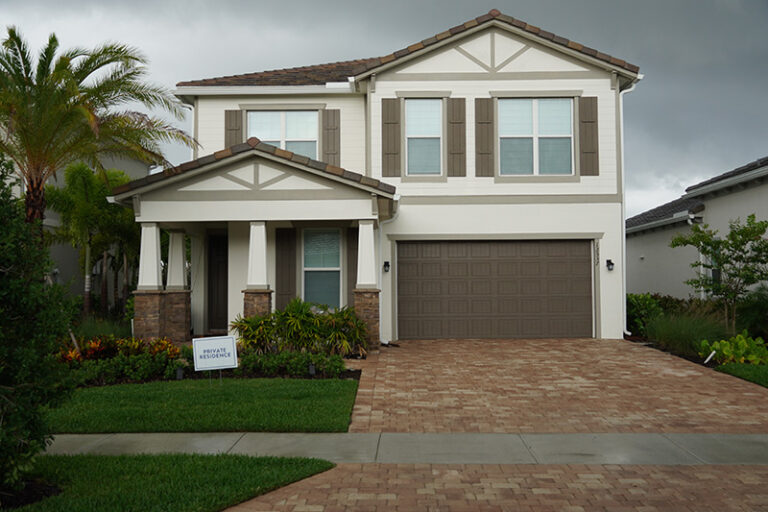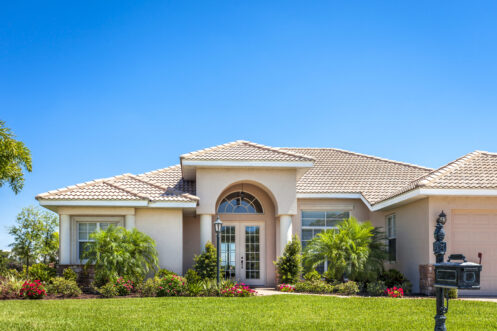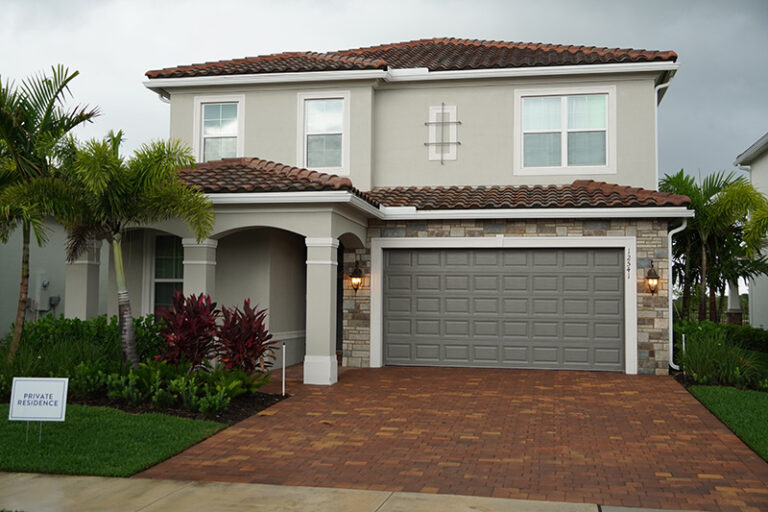

Roof color affects indoor temperature, though not as much as most homeowners expect. Color changes roof surface temperature dramatically and attic temperature substantially. The change you feel inside an air-conditioned room is small because the thermostat holds your setpoint and the benefit appears on the power bill. In homes without air conditioning, cool roofs lower maximum indoor temperatures by 2.2 to 5.9 degrees Fahrenheit.
Every color conversation we have in a driveway starts with appearance and ends with a question about the power bill. Those are different questions. In our 40+ years of roofing Florida homes, the most common mistake is a homeowner assuming a lighter shingle guarantees a cooler house, then feeling let down when the thermostat still reads 76 in August.
Does Roof Color Affect Indoor Temperature, or Just Your Power Bill?
If Your Air Conditioner Is Keeping Up
Your system already holds the house at the number you set. A lighter roof does not lower that number. It reduces how hard the system works to maintain a comfortable temperature. Berkeley Lab reports that solar reflectance from a cool roof can lower peak cooling demand and energy bills.
If the Space Is Not Fully Conditioned
Indoor temperature drops measurably when the air conditioner is not doing that work. The EPA reports a maximum indoor reduction of 2.2 to 5.9 degrees Fahrenheit in homes without air conditioning. In a lanai, garage, or bonus room your system barely reaches, you will feel it.
The Winter Penalty Barely Applies Here
Cool roofs carry a heating penalty in cold states, where a reflective roof means a higher winter bill. Florida is in the warmest climate zones in the country, so that tradeoff is nearly irrelevant.
Color Is a Guess. Reflectance Is a Measurement.
This question is more interesting than it seems. According to Berkeley Lab’s Heat Island Group, slightly less than half of sunlight is visible to the human eye. The rest arrives as near-infrared energy that carries heat and does not affect the color you see.
Solar Reflectance
Solar reflectance is the fraction of sunlight a roof surface reflects rather than absorbs, reported on a scale from 0 to 1.
Near Infrared Radiation
Near-infrared radiation is the invisible portion of sunlight just beyond red in the spectrum and accounts for roughly half the energy hitting your roof. Two shingles that look identical on a sample board can reflect very different amounts of that invisible half.
Roof Appearance vs. Measured Reflectance: What Your Eye Can and Cannot Tell You
| Roof appearance | Visible light | Near-infrared light | What to ask the supplier for |
|---|---|---|---|
| White or very light | Mostly reflected | Usually reflected too | Three-year-aged reflectance, not just initial |
| Cool colored mid tone or dark | Mostly absorbed | Can still be largely reflected | The rated value for that exact color |
| Standard mid tone | Partly reflected | Often mostly absorbed | Whether the product uses cool pigments at all |
| Standard dark | Nearly all absorbed | Nearly all absorbed | A lighter or cool colored alternative |
Color accounts for about half of sunlight. Only a rated number tells you about both.
Cool Roof Technology: How a Dark Shingle Can Still Reflect Heat
Cool roof technology refers to pigments and coatings engineered to reflect the invisible near-infrared portion of sunlight while leaving the visible color unchanged. That is what lets a homeowner keep a weathered wood or charcoal look without accepting a roof that behaves like asphalt paving.
The performance is real but limited. Berkeley Lab’s cool color roofing research reported colored metal and clay tile products reaching solar reflectances of 0.30 to 0.60, with prototype light-colored shingles up to 0.35. Compared to a white tile or metal roofing system in the 0.65 to 0.75 range, the ranking is clear: cool-colored products beat conventional dark products decisively but still trail a truly light surface. If aesthetics or an approved palette rules out white, cool-colored shingle roofing is the compromise that actually works.
One caution we give every homeowner: the ENERGY STAR label for roof products was retired on June 1, 2022. If a salesperson hands you an ENERGY STAR roofing certificate, ask what year it was issued.
Why a White Roof in Florida Does Not Stay White
A reflective roof loses performance as it weathers, and Florida is harder on roofs than most of the country. Aged solar reflectance is measured after three years of outdoor exposure, unlike the initial value on a new sample. The gap between those numbers is where optimistic sales math hides.
The Cool Roof Rating Council weathers product samples for three years at approved test farms in three climates representing the country: Arizona for hot and dry, Ohio for cold and temperate, and Florida for hot and humid. Our climate earned its own test site for a reason. Warm humidity feeds the dark algae streaking Florida homeowners recognize on north-facing slopes, and organic growth on a light roof reduces reflectance as well as curb appeal.
Ask for the aged number on the exact color you are buying. Ask about algae-resistant granules in the same breath.
What Your HOA Can and Cannot Tell You About Roof Color
A large share of Florida housing stock sits in deed-restricted communities, so for many homeowners the color decision runs through an architectural review committee before it reaches a roofer.
Under Florida Statute 720.3035, an HOA can only enforce rules about a home’s exterior if those rules are included in the community’s recorded governing documents or authorized design guidelines. The law also requires the HOA to apply those rules fairly and consistently to all homeowners.
The practical advice: request the approved palette in writing before you fall in love with a color, and submit early. For tile reroofs in Mediterranean-style neighborhoods around Doral and Coral Gables, the approved palette and color list often narrows the field before performance enters the conversation. Cool colored products are often the only route to better reflectance within a fixed palette.
Ask your contractor for the three-year aged solar reflectance of the exact color you are considering, and get it in writing. Any product worth installing has that number published, and any contractor worth hiring can find it. Then choose the color you want to look at, knowing what it costs you in cooling.
Picking the Right Shingle Color: A Roof Replacement Done Right
Ernesto Tamayo is color blind. That turns a decision most homeowners make from a sample board into something he could not settle alone. The stakes were not trivial: the new shingle field had to work with his existing exterior wall paint on a house he would see every day for decades. Our roofer Tim Schwarz worked the problem with him rather than around him.
In Ernesto’s words:
“My roofer, Tim Schwarz, was amazing. He spent the time walking me through every step of my roof replacement and helped me choose the right color shingle that would contrast with my exterior wall paint as I’m color blind. The right tech made all the difference in picking this company, and I had a cheaper estimate, not by much, but Action Roofing was the definite way to go.”
Ernesto had a cheaper estimate in hand, not by much, and chose us anyway, crediting the technician for the decision. A color choice you understand is one you do not second-guess in year three. Read Ernesto’s full Google review.
Why Homeowners Bring Roof Color Questions to Action Roofing
We have worked on Florida roofs for more than 40 years, from the Panhandle to Pompano Beach. That matters for a color question because we install all types of roofs, including shingles, concrete and clay tile, metal, and low-slope systems. We have no reason to steer you toward the one product line a company stocks.
We will pull rated reflectance values for the colors on your short list. We will tell you where a cool colored product is worth the upcharge and where it is not. We will provide you with documentation that your architectural committee will accept.
Request your free roof estimate today.
Review our roofing warranties before you compare bids, and ask about financing if the color you want sits on a premium product line.
FAQs
Does a dark roof help lower my heating bill in the winter?
Barely, in Florida. A dark roof does absorb solar heat that slightly offsets winter heating demand, an effect known as the cool roof heating penalty, but it only matters where the heating season is long. Florida sits in the warmest U.S. climate zones and runs a cooling-dominated year, so the summer savings from a reflective roof outweigh any winter give-back for the vast majority of homes in the state. In the Panhandle, the heating season is longer than in Miami, though still short enough that reflectance remains the better bet.
Can I paint or coat my existing roof a lighter color instead of replacing it?
It depends entirely on the roof type. Reflective coatings are a normal, engineered solution on low-slope membranes, metal panels, and some tile, and they can meaningfully raise reflectance without a tear-off. Coating asphalt shingles is a different matter: most shingle manufacturers do not approve it, and applying a coating can void your material warranty, so check warranty terms before anyone sprays anything. Have a licensed roofer confirm your system and remaining service life first, because coating a roof near the end of its life postpones the real decision.
Does roof color affect how long a roof lasts in Florida?
Surface temperature drives material aging, so a cooler roof generally ages more slowly than a hotter one of the same product. Higher reflectance lowers peak surface temperature and reduces the daily expansion and contraction that fatigues asphalt shingles, sealants, and fasteners over time. That said, color is a secondary factor next to installation quality, ventilation, and underlayment selection, and no color choice will rescue a poorly installed roof. Florida ultraviolet exposure and humidity remain the dominant aging forces regardless of shade.
Which roof colors hide algae streaking best in Florida humidity?
Mid-tone and darker colors disguise the dark streaking caused by algae growth better than white or very light roofs, which is a genuine tradeoff against reflectance. The better answer is to address the cause rather than camouflage it: ask for shingles with algae-resistant granules, which use copper or zinc to inhibit growth, and keep the roof clear of debris and overhanging branches. Regular roof maintenance preserves both appearance and reflectance, since organic growth on a light roof reduces the reflectance you paid for. A light roof that gets cleaned outperforms a dark roof that hides its problems.
Do I need a permit in Florida to change my roof color?
Color itself is not what triggers a permit, but the work almost always is. Replacing or recovering a roof covering in Florida requires a permit and inspections from your local building department. That permit applies whether you keep the same color or change it. If your home is in a deed-restricted community, you will likely need architectural committee approval for the color in addition to the building permit, and those are two separate approvals on two separate timelines. Start both early, because permitting is where roofing projects stall.
Key Takeaways
- The EPA reports that cool roofs lower maximum indoor temperatures by 2.2 to 5.9 degrees Fahrenheit in homes without air conditioning, and cut peak cooling demand by 11 to 27 percent in air-conditioned homes.
- In an air-conditioned Florida home, the thermostat holds your setpoint, so a lighter roof shows up as lower cooling energy use rather than a lower indoor reading.
- Berkeley Lab’s Heat Island Group reports that slightly less than half of sunlight is visible to the human eye, so color alone cannot tell you how much solar heat a roof absorbs.
- Berkeley Lab’s cool-color roofing research reported colored metal and clay tile products reaching solar reflectances of 0.30 to 0.60, and prototype light-colored shingles reaching up to 0.35.
- Cool roof technology reflects the invisible near-infrared half of sunlight, which is how a dark-looking roof can outperform a conventional roof of the same shade.
- The Cool Roof Rating Council weathers samples for three years at test farms in Arizona, Ohio, and Florida, with the Florida site representing hot and humid climates.
- The ENERGY STAR specification for roof products was retired on June 1, 2022, so no roofing product has been certified under it since that date.
- Under Florida Statute 720.3035, an association may enforce external appearance standards only to the extent stated or reasonably inferred in its recorded declaration or authorized published guidelines, applied reasonably and equitably.
Citations and References
- U.S. Environmental Protection Agency, Heat Island Effect: Using Cool Roofs to Reduce Heat Islands
- Lawrence Berkeley National Laboratory, Heat Island Group: Cool Science
- Lawrence Berkeley National Laboratory, Heat Island Group: Cool Color Roofing Materials
- Cool Roof Rating Council, Roof Rating Program and three-year weathering process
- Lawrence Berkeley National Laboratory, cool roofs
- ENERGY STAR, Roof Products Specification Version 3.0, sunset effective June 1, 2022
- The Florida Senate, 2025 Florida Statutes, Section 720.3035, Architectural control covenants; parcel owner improvements; rights and privileges